Bloomberg’s latest snapshot of global FX markets shows something important happening beneath the surface: the Chinese yuan is steadily becoming a larger part of world finance. The yuan now accounts for 8.5% of global currency transactions across spot trading, forwards, swaps, and options, up from 7% in 2022. That may not sound dramatic at first glance, but in the currency world, shifts like this usually happen slowly, then suddenly.
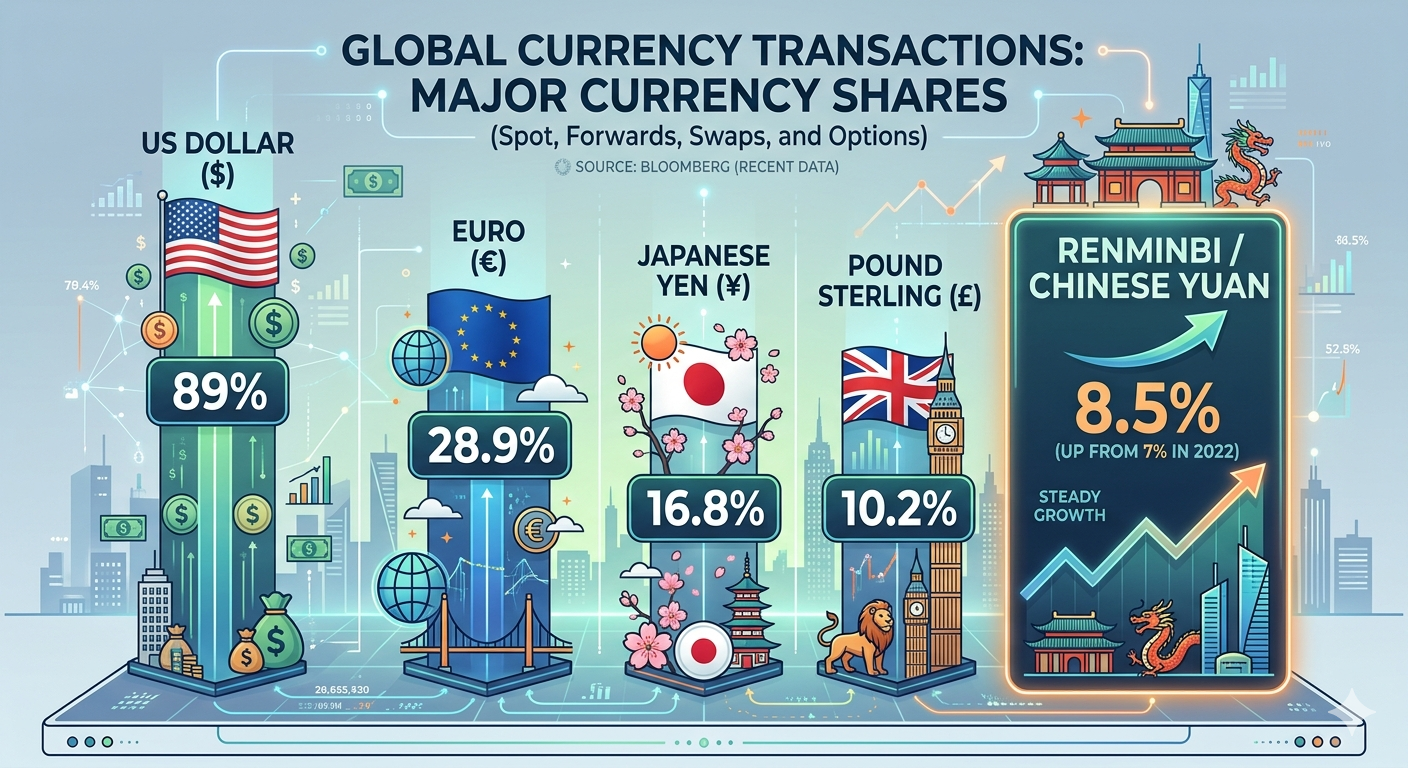
Still, perspective matters. The US dollar remains overwhelmingly dominant at 89% of all transactions. That means nearly every major trade route, hedge, reserve strategy, and cross-border deal still touches the dollar in some way. The euro follows at 28.9%, the yen at 16.8%, and the pound at 10.2%. Because FX trades involve two currencies, totals exceed 100%, a detail people often miss.
What’s driving the yuan higher? China’s expanding trade footprint, more bilateral settlements in yuan, growing use in commodities deals, and efforts by Beijing to internationalize the currency. Sanctions risk and geopolitical fragmentation have also pushed some countries to diversify away from exclusive dollar reliance.
But this is not a “dollar replaced” story, not even close. The dollar still benefits from deep capital markets, trust in US Treasury liquidity, legal infrastructure, and decades of network effects. Those advantages are hard to replicate. The yuan can grow while the dollar remains king for years, maybe much longer.
So the real takeaway is subtler: the world may be moving from a unipolar currency system toward a more multipolar one. The dollar stays at the center, but other currencies, especially the yuan, are slowly claiming more space around it. Quietly, and maybe a bit faster than many expected.