• Skip to main content
  • Skip to secondary menu
  • Skip to footer

Analysis.org

Intelligence Analysis in Market Context

  • Sponsored Post
  • Market Research Reports
    • Technology Analysis
  • About
  • Contact

China: When Invasive Species Come With the Cargo

September 6, 2025 By Analysis.org

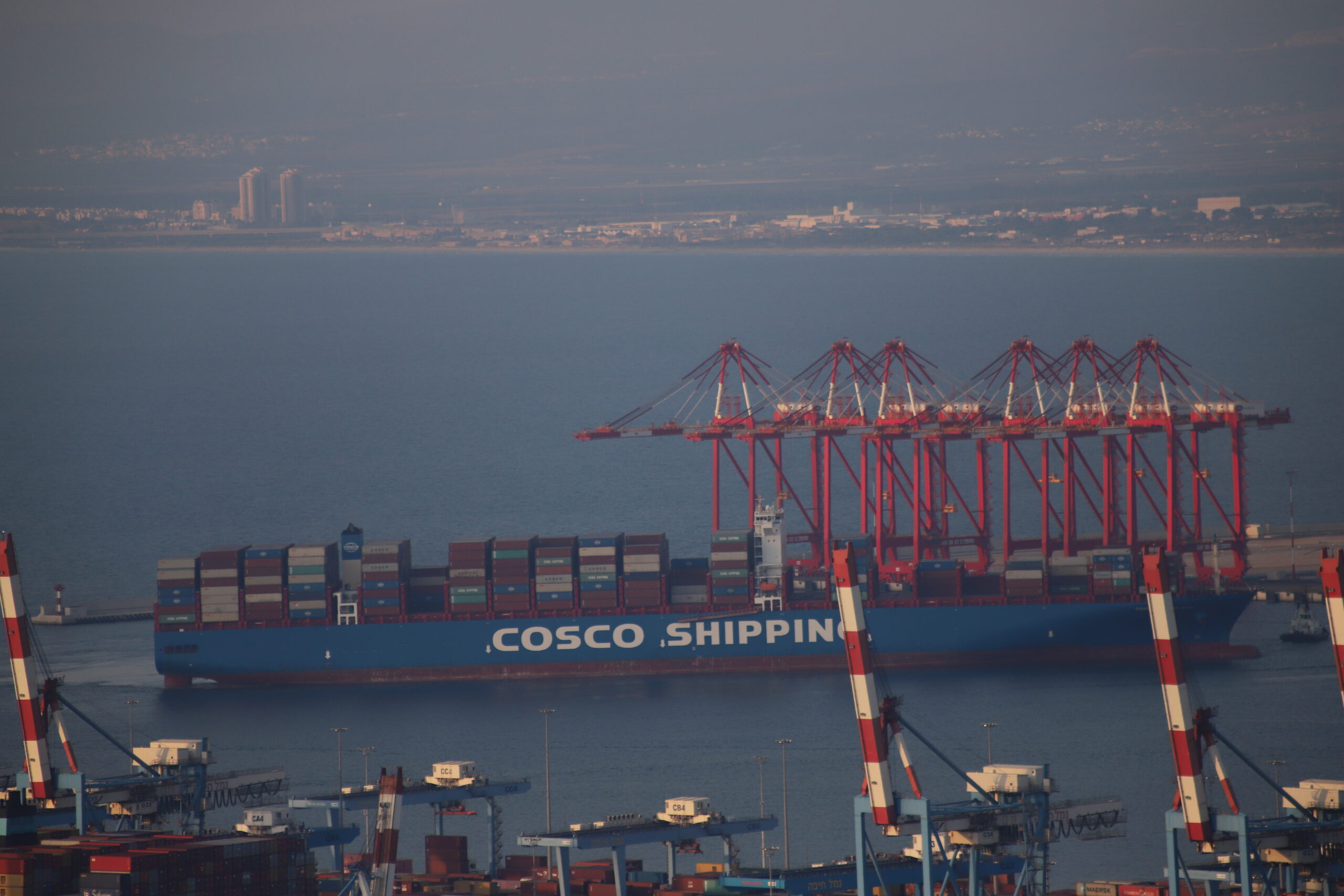
From a high vantage over a pearl-gray bay, the scene feels both ordinary and momentous. A colossal blue container ship slides past like a moving wall, the white block letters “COSCO SHIPPING” spanning the hull so broadly they read as a state banner. Tier upon tier of multicolored boxes climb toward the wheelhouse, a man-made cliff face that dwarfs the tugs and pier furniture around it. Along the quay, a phalanx of red gantry cranes stand like steel herons poised to feed, their lattice booms tangled in cables and pulleys, their legs planted in concrete that disappears into a sheen of late-day haze. In the far background, low hills and high-rises are softened by sea mist, but the foreground is razor sharp: rails, catwalks, container rows, a forest of masts and light poles. The ship’s wake is minimal, almost indifferent; the real mass is hidden below the waterline, where the ballast and the biofilm ride.
China: When Invasive Species Come With the Cargo

That single frame is a tidy parable of the century: trade, scale, and the flagless power that moves in on schedules, not in salvos. COSCO is not just a brand; it’s the public face of a state-owned logistics empire that touches nearly every horizon line a port city can draw. When such a hull ghosts into your harbor, it brings more than cargo. It brings routes, rules, relationships—and creatures. Barnacles and bryozoans clinging to paint; micro-organisms teeming in ballast tanks; crabs and tunicates lurking in niches no customs inspector will ever see. The ship moors alongside your economy, and the ecological and political hitchhikers step off together.

Ecologists have long warned that global shipping is the most efficient invasive-species conveyor ever built. Ballast water taken on in one ecosystem and discharged in another is a biological swap meet, and hull fouling is a slow-motion migration. Ports try to manage the risk with treatment systems and inspections, and those efforts matter, but scale reasserts itself. The more port calls, the more vectors. The larger the fleet, the more surface area on which life can travel. Invasions are rarely dramatic; they creep. A few larvae here, a patch of biofilm there—until the local food web tilts, municipal budgets swell with eradication costs, and fishermen wonder when their bay changed languages.

Geopolitics has its own ballast. Over the past decade, Chinese state-backed firms have taken stakes, concessions, or operating roles at dozens of ports, weaving a logistics web from the South Pacific to the Mediterranean. On a spreadsheet, it reads as throughput, free trade zones, and terminal efficiency. In practice, it can become leverage: regulatory sway, data visibility on cargo flows, preferred access for friendly fleets, and a subtle chill on decisions that might offend the landlord. The steel isn’t inherently sinister—cranes lift for anyone—but infrastructure is never neutral. Who owns the keys to the gatehouse decides who lingers inside the fence.

Offshore, China’s distant-water fishing armada—the fleet that eats the sea—extends this logic to the living ocean. Subsidized, dispersed, and often operating beyond the reach of weak coastal states, segments of this fleet have been documented engaging in illegal, unreported, and unregulated fishing, with journalists and NGOs chronicling labor abuses, forced work, and ghost-ship tragedies. These boats strip reefs and seamounts the way clear-cutters strip hillsides, then transship catches to hide the trail. On AIS they wink in and out; on satellite, they bloom like a nocturnal city over squid grounds. It is maritime extraction at industrial scale—food security for some, ecological bankruptcy for others—and it sails beneath the same economic flag as the container lines and port concessions.

What binds the cargo terminal, the trawler grounds, and your municipal waterfront is not only Chinese ambition but the structure of modern dependence. We built economies around just-in-time everything, then discovered “just in time” is also “just in case”: in case a single company decides your port call costs a little more; in case a regulatory fight turns into a slowdown; in case an inspection regime becomes a bargaining chip. The picture above is peaceful—no water cannons, no gray hulls—because most influence does not arrive with sirens. It arrives with invoices, schedules, and memoranda of understanding, and it stays because disconnecting would be painful for everyone.

None of this means ports should go dark to foreign investment or seal off trade. It means host nations must treat maritime access as strategic, not incidental. Concession agreements need daylight clauses and unambiguous security carve-outs. Port-community systems should log who sees which data and when, with sovereign oversight of analytics derived from cargo flows. Dual-use facilities—those that could service naval ships as easily as freighters—warrant clear red lines and active monitoring. Environmental safeguards must be more than signage: rigorous ballast-water enforcement, hull-cleaning protocols that don’t simply scrape life from one dock to settle it at another, and ecological rapid-response budgets sized for the problems we actually face.

There’s also a human ledger running through the waves. If a nation tolerates labor trafficking and violence in the fisheries that supply its seafood exports, the true cost of cheap protein is borne by men who cannot leave their decks and by coastal communities whose stocks are quietly stolen. If coastal states cannot enforce their exclusive economic zones, then regional coalitions should help them build the maritime domain awareness and enforcement capacity to do so, with transparent, rules-based patrols that don’t escalate but don’t look away either. The antidote to a sprawling, state-steered maritime empire is not a mirror image of it; it is a network of ports and patrols that still believes public goods are worth providing.

Look back at the image and you can feel the seduction of scale. The cranes are elegant, the containers look like toys, and the ship’s slab side is a calm, corporate blue that suggests reliability rather than reach. But read the watermark on reality as you would the lettering on that hull. COSCO is a ship; it is also a symbol. It represents how a state can project itself without uniforms, how power can dock with a pilot’s help, and how incremental, “win-win” arrangements can, over time, recompose the very waterfront that used to belong entirely to you.

Harbors teach patience. Tides work on the hour, ships on the day, contracts on the decade, ecosystems on the generation. If invasive species creep into your bay and state influence creeps into your governance, the remedy is not panic but prudence paired with purpose: insist on transparency, price externalities honestly, defend labor and marine life with real enforcement, and diversify the partners who keep your quay alive. The fleet that eats the sea is most effective when its targets are hungry, hurried, and hopeful; a community that knows what it is worth, and what it refuses to sell, is a harder harbor to colonize—biologically or politically.

Filed Under: Briefing

Footer

Recent Posts

  • Broadcom Q3 FY26: The Q4 Guide Implies a 55% Incremental Operating Margin Against 67.9% Delivered
  • Tempus AI (TEM) Clears FDA for ECG-PH: A Third Cardiology Device Its Own CFO Says Generates No Revenue
  • Nasdaq Falls 1.2% as Oil Tops $85 and the 30-Year Hits 5.32%: Only One Input Is Actually New
  • Marvell (MRVL) Catalyst Calendar Into Year-End: The $126-to-$400 Target Spread Resolves on October 6, Not August 27
  • Lattice Semiconductor Q2 2026: A 69.5% Gross Margin Guide Undercuts the AMI Accretion Story
  • Apple and Amazon Earnings: The $20 Billion Memory Line That Explains Both Stocks
  • ServiceNow (NOW) Q2 2026: The 98% Renewal Rate Matters More Than the $1 Billion AI ACV
  • Arm, Qualcomm and UMC Report the Same Day at Three Different Layers of the Stack
  • Bloom Energy (BE) Q2 2026: Warranty Accruals Hit 4.2% of Product Revenue, Seven Times Last Year’s Rate
  • SK Hynix Q2 2026: DRAM ASPs Rose 30% and the ADR Still Made a Record Low

Media Partners

  • Market Analysis
  • k4i.com
  • Market Research Media
VR Status Report 2026: Quest Sales Keep Falling While Smart Glasses Take the Money
The Case That the US Can Grow Out of $40 Trillion in Debt: Three Conditions the Clinton Surpluses Actually Met
The $40 Trillion Debt: Why AI Capex Raises Treasury Borrowing Costs Faster Than It Raises the Tax Base
Rockefeller Center Has Been a Credit Instrument for Forty Years: From the 1985 REIT to the $3.5 Billion 2024 CMBS
Who Insures the AI Buildout? $30 Billion Campuses Meet a $3.5 Billion Ceiling
Retail Earnings Week: The 1.65% Real Sales Number Behind the 5% Headline
SanDisk and Marvell Top Our Hot Stocks List: Two-Thirds of FY2028 NAND Bits Are Already Contracted
US Market Cap at $74 Trillion: Why the Market Has Room to Grow Without Repricing
Buffett Indicator at 230%: Why the Labor Share Makes Market Cap to GDP Unreadable
60-Month Transformer Lead Times Are a Bigger AI Constraint Than the Copper Deficit
Palantir (PLTR) Gave Back Half of a 9.1% Rally While Snowflake Kept 21%
DFEN Fell 33% in a Month While Its Index Fell Only 11%
Kioxia and Sandisk's $31 Billion NAND Plan Produces No New Bits Until Fiscal 2029
Why Marvell and Memory Stocks Are Down After Nvidia Guided FY28 Growth to 70%
Iran-Linked Hackers Shut Down a UK Power Plant for Four Days: What the Four Days Actually Signal
Marvell (MRVL) Falls 6% Two Days After the Google Warrant: The Vesting Schedule Explains the Round Trip
Marvell (MRVL) Jumps 13% on Google TPU Deal: The $120 Billion Number Buried in the Warrant
Broadcom (AVGO) Falls 5% on a $370 Billion AI Debt Estimate: The $29 Billion in the 10-Q Is the Real Exposure
Marvell's Entire CXL Market Is $4 Billion in 2030 Against a $190 Billion Market Cap
SanDisk (SNDK) and Kioxia's 9th-Generation QLC NAND: A 33% Faster Die That Adds No Bits
AI Slop Earns Higher CPMs Than Clean Inventory: Why the Ad Market Cannot Fix the Web It Funds
Weekly Network Analytics, July 19 to July 25, 2026: Visits Up 14%
Adobe (ADBE) and Figma (FIG) Have Each Lost Roughly Half Their Value to a Competitor Set Worth $34 Million
Getty Images Kills the $3.7 Billion Shutterstock Merger Rather Than Sell the Editorial Business the UK Demanded
Fox’s $22B Roku Deal: 4.6x Sales, Paid in 1.5x Stock
Tuesday Open: AI Earnings Engine Holds the Line as Iran Overhang Fades to Noise
China’s U.S. Treasury Holdings: The Great Repositioning (2021–2025)
Infographic: Why the 2025 CIPA Data Proves the APS-C Renaissance is Real
How WiFi Changed Media
Canva Acquires Simtheory and Ortto to Build End-to-End Work Platform

Media Partners

  • 3V.org
  • Referently.com
  • Media Presser
Wonderful's $5B Series C: 50x Forward ARR on $154,000 of Revenue Per Employee
Nvidia (NVDA) Buys Hugging Face for $12.9B, Under the $13B Floor Hugging Face Floated Three Days Earlier
Apple's Chinese Memory Push Is a Precedent Problem for $MU and $SNDK, Not a Volume Problem
NYC Sidewalk Sheds and Local Law 11: Why the Shed Is Cheaper Than the Repair
Enigma Raises $70M for Human-Robot Interaction as Multiverse Raises $570M to Shrink Models
Kimi K3 Weights Released as Washington Debates Banning Chinese AI Models
Meta's Hyperion Data Center in Louisiana Was Negotiated With Tax Breaks and Little Public Input
Robots.txt vs Noindex: Why Blocking Crawlers Does Not Remove Pages From Search
Infinity.inc Raises $15 Million to Build AI Inference Software for Any Chip
Inside the Cobot Boom: What a Yaskawa Trade Show Floor Reveals About Industrial Automation
Book Ciphers and Running-Key Ciphers: Why a Text-Based Key Fails Today
La Rambla, Barcelona: How the Pickpocket and Scam Economy Actually Works
The Broken Noses on Egyptian Statues Were Not an Accident
Why the House Edge Always Wins and the Venice Casino Still Nearly Closed
Porto Cancelled 1,413 Tourist Rental Licences and Delivered 448 Homes
What the Name, Port and IMO Number Painted on a Ship's Stern Actually Mean
Flynn Effect Reversal: What the Data Shows About Falling Cognitive Test Scores
Agentic Manufacturing Networks: How CAD MCP Servers and Instant Quoting Engines Are Closing the Design-to-Part Loop
Export Control Terms Every Chip Investor Confuses: EAR, Entity List, FDPR
Wall Street Trading Slang: The Language Traders Actually Use
Chinese Rare Earth Suppliers Are Refusing US Orders Weeks Before Xi Visits Washington
Every Supply Chokepoint Has a Shelf Life, Including China's Rare Earth Grip
Inference Prices Are Falling Faster Than Anyone's Budget Assumed
Non-Binding Agreements Now Govern More Than Treaties Do
Nvidia's $12.93 Billion Hugging Face Deal Buys Distribution, Not Models
Texas Froze Data Center Grid Connections and Found 474 Gigawatts of Ghost Demand
The Dutch Central Bank Moved a Quarter of Its Gold Reserves Out of the United States
The G20's Carolina Principles Quietly Abandon the Idea of One Global AI Rulebook
The Microsoft 365 Outage Was an Authentication Failure, Which Is the Whole Problem
Water Is the Data Center Constraint Nobody Puts in the Press Release

Copyright © 2026 Analysis.org

Media Partners: Technologies · Market Analysis · Market Research · Referently · Photography

We use cookies on our website to give you the most relevant experience by remembering your preferences and repeat visits. By clicking “Accept”, you consent to the use of ALL the cookies.
Do not sell my personal information.
Cookie SettingsAccept
Manage consent

Privacy Overview

This website uses cookies to improve your experience while you navigate through the website. Out of these, the cookies that are categorized as necessary are stored on your browser as they are essential for the working of basic functionalities of the website. We also use third-party cookies that help us analyze and understand how you use this website. These cookies will be stored in your browser only with your consent. You also have the option to opt-out of these cookies. But opting out of some of these cookies may affect your browsing experience.
Necessary
Always Enabled
Necessary cookies are absolutely essential for the website to function properly. These cookies ensure basic functionalities and security features of the website, anonymously.
CookieDurationDescription
cookielawinfo-checkbox-analytics11 monthsThis cookie is set by GDPR Cookie Consent plugin. The cookie is used to store the user consent for the cookies in the category "Analytics".
cookielawinfo-checkbox-functional11 monthsThe cookie is set by GDPR cookie consent to record the user consent for the cookies in the category "Functional".
cookielawinfo-checkbox-necessary11 monthsThis cookie is set by GDPR Cookie Consent plugin. The cookies is used to store the user consent for the cookies in the category "Necessary".
cookielawinfo-checkbox-others11 monthsThis cookie is set by GDPR Cookie Consent plugin. The cookie is used to store the user consent for the cookies in the category "Other.
cookielawinfo-checkbox-performance11 monthsThis cookie is set by GDPR Cookie Consent plugin. The cookie is used to store the user consent for the cookies in the category "Performance".
viewed_cookie_policy11 monthsThe cookie is set by the GDPR Cookie Consent plugin and is used to store whether or not user has consented to the use of cookies. It does not store any personal data.
Functional
Functional cookies help to perform certain functionalities like sharing the content of the website on social media platforms, collect feedbacks, and other third-party features.
Performance
Performance cookies are used to understand and analyze the key performance indexes of the website which helps in delivering a better user experience for the visitors.
Analytics
Analytical cookies are used to understand how visitors interact with the website. These cookies help provide information on metrics the number of visitors, bounce rate, traffic source, etc.
Advertisement
Advertisement cookies are used to provide visitors with relevant ads and marketing campaigns. These cookies track visitors across websites and collect information to provide customized ads.
Others
Other uncategorized cookies are those that are being analyzed and have not been classified into a category as yet.
SAVE & ACCEPT